Portable Battery Generator
Connecting a Portable Power Station to Your Home
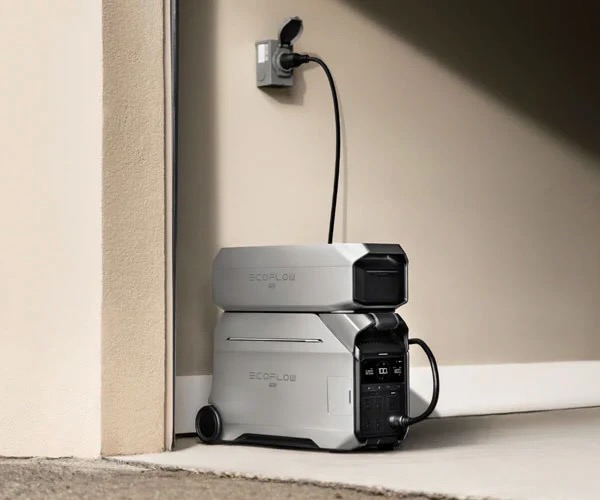
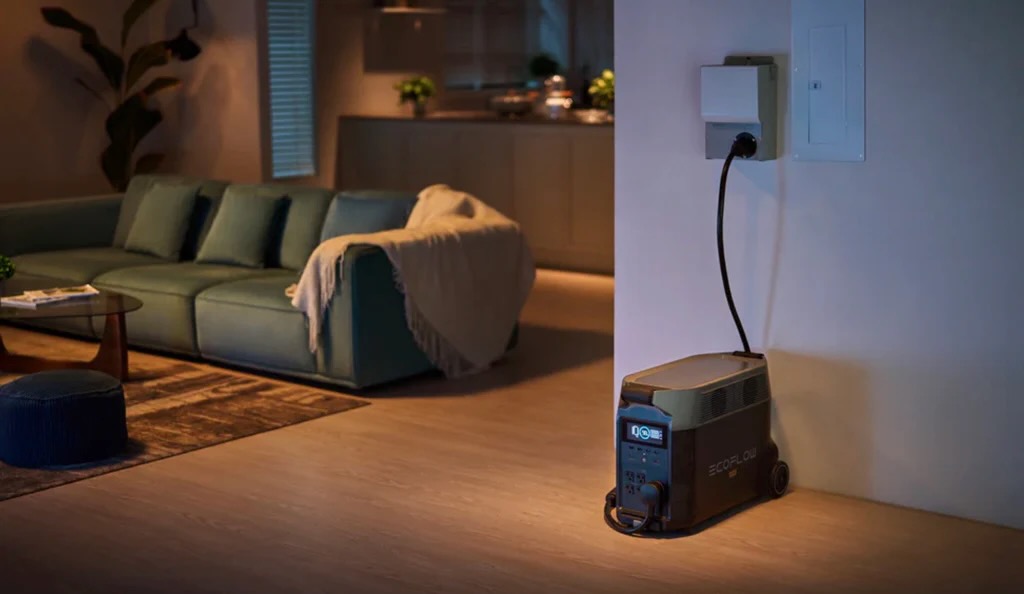
Did you know that most portable battery stations can be plugged into a typical Portable Generator Connection? This means you could connect your battery generator to power your house in place of a gasoline portable generator. By connecting the portable power station to your transfer switch or inlet & interlock system, you could energize your entire house easily, no more having to carry the battery around the house to power individual essential items.
There are many benefits of using a battery generator, often called a solar generator, to power your house. The most noticeable is the sound. Unlike a gas powered portable generator, which is extremely loud, a battery generator is completely quiet. Another benefit is that a battery could be used inside your home since there are no fumes or exhaust. This means you could leave it in a convenient spot, such as your garage or basement. When it’s needed, you just press the power button, much more convenient than having to drag a generator outside and get it running.
A hybrid system using a battery in conjunction with a portable generator is a great option. The battery could be connected for the first few hours of the power outage. If the power remains out for a longer period of time, you can switch to using the generator to power your house long-term. This will give you the opportunity to recharge your battery generator from the gasoline generator. Then, during the nighttime you could switch back to powering your house with the battery so that you and your neighbors don’t have to listen to the loud gas generator roaring all night.
Portable battery stations are a new technology to many homeowners and the specs can be confusing. The output of a battery generator is measured in watts (W). Sometimes these numbers are listed in watts directly, sometimes they are listed in kilowatts (kW), which is 1000 watts. So, for example, a battery generator with an output of 7200 W could also be listed as 7.2 kW. This is the output, this shows how much you could power at one time from that battery storage device. This is the same as the output spec on a portable generator. A battery backup with 7200 W output can power the same items in your house as a generator with a 7200 W output.
There’s a second measurement for battery generators which is just as important. This is how much electricity can be stored in the battery. This is measured in watt-hours (Wh), which could also be listed as kilowatt-hours (kWh). When comparing this to a generator, this would be synonymous with the size of the gas tank on that generator. A portable battery station with a 6000 watt-hour battery will run for twice as long as one with a 3000 watt-hour battery. The same as how a generator with a 10 gallon gas tank will run for twice as long as a generator with a 5 gallon tank.
Solar panels can be added to most portable battery stations. They are not necessary, but they will help to recharge your battery during an outage. They will extend the runtime by powering the items in the house that you are currently using or charging the battery when your usage is low. With enough solar panels you may be able to run indefinitely during an outage. Many people choose to store solar panels in their garage so they can be taken out and leaned up against an outside wall or laid on the ground during an outage. Using solar panels with a battery generator is optional, some people will find it to be an inconvenience. The decision is yours.
We know this is a lot of new information and numbers to keep up with, which is why we would love to help. Call or text us anytime to learn more about connecting any type of generator to your house safely and code-compliantly and for help choosing a battery generator that will work for you.